The Other Elvis
Nov 12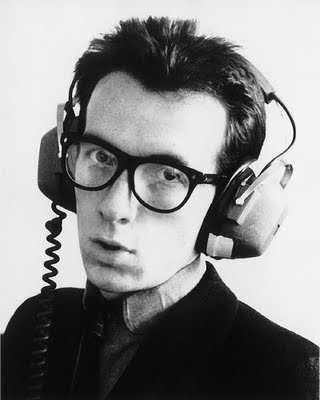
Elvis Presley died on August 16, 1977.
Just a few weeks earlier, Elvis Costello was born, with the release of his first album, My Aim is True. Those obsessed with symmetry (namely, me) could pour plenty of meaning into that coincidence. In the foreground, you have the death of a man whose early career gave rock ‘n’ roll its legs but whose later years represented every bloated excess that the music industry had come to embrace. In the shadow of that death, one of the most intelligent and passionate musical artists of all time quietly set his first album onto record store racks, with every intention of tearing the world apart with his melodic punk. One star fades from the pop hemisphere; another flares to take its place. Out with the old, in with the new. Though not exactly, since Presley has hardly disappeared from our lives since his death and Costello hasn’t exactly become a household name.
Yet if the artistic agendas of a frustrated truck driver from Memphis and a frustrated computer programmer from England can have anything in common, it’s a constant fire to incite, one that Presley slowly extinguished as his popularity skyrocketed and that Costello has fed as the fuel of his career. The same instinct that propelled Presley to mumble “Let’s get real gone” into a Sun Studios microphone and ignite his band into a frenzy on “Blue Moon of Kentucky” would drive Costello in his early concert appearances to tear through a furious set, then storm off stage without so much as a “Thank you” or an encore. At the same time, their respective furies have never claimed a particular focus; for Presley, his literal goal may simply have been to get his listeners “real gone” with his music, while Costello was probably claiming a hefty chunk of the same righteous anger that fueled much of the punk scene in England.
Over the years, Costello has eschewed the “angry young man” label for which he first became known. But when you first hear Elvis Costello, whether it’s his latest album with the Impostors or any of his previous work, it’s that anger that hooks you in, the jerking, fire-spitting spite that is the soul of so many of his albums. It’s always there, in a whisper or a scream, lurking deep within or burning on the surface. You can feel the fire; it singes your ears, maybe in a way that music really hasn’t since the dawn of the King’s reign.
I fell in love with Costello’s music for the same reason that many other angry young men fall in love with it. He was a scrawny, clever pop star who said everything I felt incapable of saying about life and love; I was a scrawny, clever nobody who embraced his vicious tracts like a holy gospel. How many similar post-adolescents have also pledged allegiance to the Man after the inaugural spin of their Costello cherry-busting album, rushing out to buy his entire catalogue in a single pop and nursing a lifelong fetish for thick Buddy Holly glasses and skinny ties? For me, that first Costello record was Spike, which I bought because it had the song “Deep Dark Truthful Mirror” on it, as well as Costello’s wistful pop hit “Veronica.” At the time, I was busy pretending that Costello’s lyrics on “Deep Dark” somehow applied to a woman I was dating: “One of these days you’re gonna have to face a deep dark truthful mirror/And it’s gonna tell you things that I still love you too much to say.” The rest of the record grabbed me enough to send me out for My Aim is True, but I didn’t really “get” that album until at least a year later.
In fact, neither of those albums were the one that sent me swooning into the depths of my ongoing love affair with Costello. No, it was Blood and Chocolate, a record regularly underappreciated by die-hard Costellites, that drove me mad with pop ecstasy. Again, part of it had to do with reading my own situation into one of the songs; “I Hope You’re Happy Now” seemed written for a guy who had made my own life a living hell because he couldn’t get over the fact that I’d started dating his ex-girlfriend. If there was anyone who I thrilled to imagine “like a matador with his pork sword while we all die of laughter,” it was this guy.
Then I really stopped to listen to “I Want You,” six minutes of pure seething desire burned onto plastic, and I could not believe my ears. Forget the invective in the lyrics themselves. Here was this guy who not only harbored all these sinister desires toward a woman who’d left him in the cold, but could also sustain this constant level of menace for a full six minutes, past any logical point of conclusion, and then let the song come to a gentle stop. Only it wasn’t gentle at all, because you knew it was a conclusion and not a resolution; the singer would simply build up his anger to the point where all this fury would just come bubbling out again. We may never hear about it, but we knew it would happen. It made the “I Want You” songs by Dylan and the Beatles sound like frolicking musical postcards.
I’ve never been much of a rock evangelist, but I couldn’t resist. I played “I Want You” for my girlfriend; she hated it. Some of my friends were confused and it made a few people uncomfortable. Still I raved on throughout the dorm, until one guy finally paid me some real attention.
“This is amazing,” I said. “I can’t believe this exists.”
“What do you expect?” he replied. “It’s Elvis Costello.”
And still, through the pseudo-intellectual bullshit approach and the personal perspective approach, I feel like I haven’t really articulated why I adore the man’s music so much. He has spoken to my heart in ways no other artist has, revealed hidden secrets in the people I know and the world in which I take up space. He has done all this through some of the most exhliarating music and ingenious words that I’ve ever heard. And he’s still doing it; I’m still finding pieces of meaning in albums that I’ve internalized through repeated listenings.
But other than the fact that he’s, um, really good or something, why? In what way does Costello speak to me that the music of my other obsessions, guys like Springsteen and Ben Folds and even Elton John, does not? Yeah, he’s angry sometimes and he’s a genius. So is Dylan; so is John Lennon. I don’t follow their every artistic movement with fierce precision. As I’m sitting here and My Aim is True is firing up on the CD player, I’m thinking of the coincidence that each of Costello’s first three albums opens with his voice. Before a note of music is played, you hear him sing.
There might be something in that. Just like Presley, Costello has always been known as a voice. For the King, it simply meant that vocal swagger that would never die out, even when the man was squeezed into sparkly jumpsuits a few sizes too small and lazily trotting through his past glories on a Vegas stage. For Costello, that “voice” means so much more. It’s the scissors that jab into your soul every time he opens his mouth, and it’s that fire in his music that never burns out, and it’s the words that collide together in ways that I’m not even sure Costello himself could explain. It’s a white-hot artistic totality that has yet to dissipate, even if it has wandered a bit too far afield on occasion.
It’s a conclusion that sounds boring even as I type it, but darnit, his artistic voice is just so damn consistent. You can draw a line from My Aim is True to this year’s When I Was Cruel and find the same themes groping each other within his songs. At the same time, he’s versatile as all hell, both for his stylistic variety (name me one other pop singer/songwriter who’s dared to record an album of R&B stylings and a record with a string quartet within a decade of one another) and for his continually evolving songwriting style. They’re all Elvis Costello songs, but his sound never gets boring. Somehow the style retains its most essential qualities and continues to evolve.
Maybe that’s why I love Elvis Costello’s music so much: the unending variety and brilliance in his voice. Every album he’s ever released has touched me in some way, whether it inspires me to jump around like an ass in my room or drives me to reconsider my views on the female species. And every time he puts out a record, I’m there the day it comes out, because he’s uncompromising and he’s almost never failed me.
But then, what did I expect? He’s Elvis Costello.
This article originally appeared in Pop-Culture-Corn Magazine.
Peasant Problem, Part 2
Nov 08[Last week, the orcs of the Battle Country declared war on their fellow LARPers. Keep reading to see how they got there and what happens next.]
Yesterday.
Wayne crouched in the underbrush. The fast-fading twilight of the late October afternoon raced against him toward darkness as he worked. With a tortoiseshell compact mirror – an old one of his mother’s, pocketed while cleaning the master bathroom – balanced in one hand, he daubed green makeup onto his round, shiny face. Next to him in the crunchy leaves, lay his glaive, all pool noodles and PVC pipe and duct tape and spray paint. The polearm was Reapsong and it swung for eight damage and, satisfied with his makeup, Wayne was Grimgnash, the orc warleader; mighty was his fury and swift was his vengeance.
In the trees around him hid the other eleven members of the Seven Skulls orc tribe. In his periphery, Chris swung a two-handed axe, testing its heft. If everybody stuck to the plan, in the morning, Wayne and his orcs would have changed the face of the Battle Country.
Through the clearing ahead, the game’s population of Arbor Elves sat around a campfire, a dutch oven hanging over the flames. One of the elves strummed an acoustic guitar while another sang along. It was, as near as any of the orcs could tell a hundred yards away, an acoustic cover of a Lady Gaga song with parody lyrics about the LARP; it was the sort of thing that meant you never got laid if you did it among a normal group of people. Everybody here, though,was predisposed to love that sort of thing, especially the elf girl swooning over the guitarist. As the tune ended, the elves all clapped and whistled. Their guard was down; staff never sent out roaming monsters on Friday nights, and when they did, it was never near a camp area.
Complacency, Wayne told the Seven Skulls, was their biggest advantage.
Looking down at the glow-in-the-dark numbers on his watch face, Wayne watched as the hour of the attack inched forward. He reached down and lifted his glaive up, resting it on his shoulder. The polearm is made from a six foot length of 3/4†PVC pipe wrapped inside a foam pool noodle and swathed in duct tape. It has been colored with spray paint and markers with an eye toward verisimilitude – the length has been painted a deep, oaky brown with bands of dark grey at the butt end to represent the iron-shod description the weapon has in some edition of the Player’s Handbook. The blade is thick foam padding, the kind they use in hypo-allergenic pillows. The fluff has been shaped into a spike, wrapped in tape and sprayed bronze,then painted with archaic-looking runes that, as far as Wayne knew, meant nothing. He’d used Reapsong for years, yet he still wondered how people gripped these things; it is still slightly too big for Wayne’s not inconsiderable hands. There were times in melee when he’d lose his grip on the haft, which had contributed directly to two of Grimgnash’s deaths over the past four years.
The orc chief checked his watch once again; it was time.
The signal was a duck call blown twice in quick succession. The HORK! HORK! was louder than Wayne expected and he waited for the elves in their camp to notice the loud, incongruous noise but they never did. He advanced forward into the night, his tribe closing ranks behind him.
The plan, as Wayne explained it at the volleyball courts that afternoon, was to hit the Arbor Elf camp quickly, wipe out the population and use it as a springboard to take the other camps throughout the night. It had to start, he instructed, with the healers. Taking out the clerics and shamans meant that the dead stayed dead, at least for thirty minutes, at which point they would just regenerate at the temple.
Wayne leaped out of the brush, his glaive swinging wildly as the blade slapped into the side of the most powerful elf cleric in the camp. He bellowed, “EIGHT DAMAGE!†as if It were a rallying cry. The huge foam beard of Fat Chris’s axe caught the girl who had been swooning over the guitarist, knocking her flat on the ground as he called his damage on her. Sniksnak, the youngest orc player, struck an elf warrior down from behind, invoked his invisibility powers and made his way to another target.
The singer made a run for it. Wayne nodded to Matt, the lone orc spellcaster, and he lobbed a beanbag toward the runner. It struck him square in the back and he stumbled for a step. As the bag hit, Matt intoned, “Slow,†and the elf slowed to a walk at once. Wayne signaled with his free hand and five orcs jogged down the escaping elf and all struck him down at once. Overkill.
The orcs looted the elves’ in-game money and their scrolls and reagents; the ones they couldn’t use could be sold at market. The raid was flawlessly executed.
There were two fatal mistakes that Wayne made. The first was in thinking that the elves would not, as soon as they were able, run straight back to their camp with allies, but the second was in not noticing that the escapee that Matt had Slowed had cast Whisperwind before he died. The Whisperwind spell allowed a player to text a message to another player at the event that weekend.
This was why the orcs were taken unawares not fifteen minutes after they cleared the elven camp. Just as they were making ready to move out again, a squad of guards came down the path at them. Wayne was the first to fall, subdued from behind by the Mikes as he struggled with a gargoyle guardsman. He watched a few others fall, then heard Fat Chris give the call to scatter into the night. It was smart thinking, Wayne knew. Otherwise, they’d all have fallen right there.
Nonetheless, all the orcs would be captured by dawn. The attack was over just minutes after it began. But the coup was just beginning.
Now.
Nobody questioned why the two boys had green-smudged faces inside their hoodies. Fat Chris and Aaron – the teen who played Sniksnak – trudged through the Wal-Mart, still sore from the night before. The cart Chris pushed was full of PVC and duct tape and hypo-allergenic stuffing and about a dozen pool toys bought on clearance. Chris had also indulged and stacked a few five pound barrels of cheese puffs and two cases of off-brand Mountain Dew, which he thought would be good for morale.
The Wal-Mart was in the town closest to Camp Lavery, about 10 miles down the state road. They’d taken the camp staff truck, which Chris acknowledged that he and Aaron had essentially stolen, even though it was common knowledge where the keys were kept, because the Council had a pair of scouts watching the camp parking lot; the Count had declared a truce until sunset, but he wanted the orcs under close observation until then. Wayne hadn’t made that easy, though: they abandoned the orc campsite and split the tribe into small groups that spread out amongst their ally races.
None of the other groups had officially thrown in against the Council yet, but they were not turning the Seven Skulls away, offering food and a place to rest at least, though Wayne was negotiating for more earnest support from several sources.
“I don’t understand why we don’t just raid the armory, Chris.†Aaron, being relatively new and young, wasn’t privy to Wayne’s grand plan. That meant he kept trying to wheedle details out of Chris, who did know most of what the next day was going to bring.
“We’re totally unarmed, Snik. We had our weapons confiscated. If we try to storm the armory barehanded,†Chris explained for the third time, “we won’t have a chance.â€
“We could buy them from the smiths, though.â€
“Wrong again, little buddy. The Count declared that we’re at war; nobody is going to sell us weapons overtly, and even if they did, we got all our coin taken when we were captured, just like our weapons.
“What we need to do,†Chris continued as he pushed the cart down the Nerf aisle, “is make a new stash of weapons. Nobody will expect it. It puts us one step ahead of the enemy and leaves them operating on incorrect assumptions.†He selected a derringer-sized dart gun from a rack, the gun designed to be palmed and kept secret. Chris tossed it to Aaron, “See if you can find five more of these.†As he did, his cell phone buzzed. It was a text message from Wayne, and it simply said, Rope. One more item for the list, then.
Twenty minutes later, Chris and Aaron were headed back to camp, the truck bed laden with the implements of war. They’d take the back entrance and drop off their cargo in the woods outside the dark elf camp before returning the truck to the staff garage, reapplying their makeup and rejoining the revolution.
As Chris drove the stolen truck back to camp, Wayne met with Aldomar, the head of the Necromancers’ College. The rendezvous occurred behind the First Aid station, with the orc chieftain flanked by armed dark elf bodyguards. Aldo came alone, but they all knew he was far from defenseless.
Aldo affected a shrill old-man voice. “I take a great risk being seen with you, orc. The College moves in shadow.â€
“And your influence wanes,†Grimgnash countered. “We have common goals. Since the Council elected new members, your men at the table have become outnumbered. The death cult doesn’t carry policy in Battle Country the way it once did.â€
“We are more comfortable when we aren’t an over threat. If the study of undeath teaches us anything, Grimgnash, it is that we must bide our time in patience.†Aldomar gave an uncomfortable cackle as he leaned on his foam boffer staff.
“Or that, regardless of boldness or reserve, the same fate awaits us all. ‘Fate dooms oft the undoomed man when doth his courage fail.’ We need support and manpower, Aldo, but what we need most is zombies.â€
The necromancer looked hesitant beneath his fake, crooked nose. Aldomar pondered. Wayne was sure it was the “Beowulf†quote that had put him over the edge. “I will not,†the magus finally said, “commit my forces to a hasty ambush. Prove to me that you have a real plan this time.â€
Wayne told him the plan and the two villains shook hands. By midafternoon, he had struck alliances with the dark elves, the necromancers, the thieves’ guild, the gnomes and a company of dwarven mercenaries who had no common cause with the orcs, but simply admired Wayne’s audacity. Hidden from scouts in the deep woods, the orcs assembled their new arsenal in secret.
Sundown.
Father Sukor was the Count’s chosen emissary to the orcs. Darren knew he had to send someone important, or the enemy would be insulted, but he also knew he could not waste a skilled warrior. Tom Courts, who had always played healers and was well-liked by most of the player community, was the ideal choice. And nobody targeted the healers or singled them out; it wasn’t illegal, but it was gauche.
Sukor walked into the orc camp to find it empty. When the scouts last reported in, there were a handful of green-skinned players in the tents and around the fire, and that had only been fifteen minutes ago.
Tom Courts never heard the approach of the dark elf assassin. He pressed his foam dagger to the cleric’s throat and whispered in his ear, “in lieu of lethal damage, I render you paralyzed; you may take no action for five minutes starting now.†Tom Courts felt the impulse to run – knew he’d been trapped – but also knew that rules were rules. Besides, he thought, they would likely kill him and he could return to his temple in thirty minutes’ time.
The coup de grace didn’t come. Instead, a pair of orcs came out of the trees behind him and held him steady while the dark elf bound his hands and feet. The orcs led Tom Courts to a campsite further down the path and deposited him inside one of the tents, along with the two scouts assigned to watch the orc camp.
Wayne sat on the bunk across from the guards, smiling, a new glaive on his lap. He looked up as the healer came in.
“Hello, Pastor. You’ll be our guest for awhile.â€
Wayne took Tom Courts’s fake beard and passed it to a runner. Back in the orc campsite, the beard was tied to a note that said “WAR†and attached to the flagpole. Then the orcs, armed with new weapons and in the company of new allies, went about their night’s work.
With Violet Light EXTRA
Nov 05
So let me tell you about my friend Tom Wong. He is a hilarious karaoke master who will carry your drunk ass home and watch Project Runway reruns with you until you sober up. He is a talented writer who has totally worked on actual TV shows. He is also a gigantic nerd who can blather for hours about Starcraft and immediately knew what I meant when I started ranting about D&D alignments mere moments after we first met.
Tom is one of the first people I send my writing to when I’m working on something and he gave tons of helpful feedback on One Con Glory. In fact, he was so willing to talk about OCG with me all the damn time that he eventually started suggesting “joke” alternative storylines involving “The Tom Character.” (Most of these storylines involved TTC getting naked with Jack Camden. In a totally believable and organic way, of course.) We laughed about it. But when I was working on “With Violet Light,” I started thinking: this story could absolutely use The Tom Character. Also, if I were to add TTC, maybe he would finally shut up about it. So I did. And this is the one and only time I will actually cop to basing a character completely on a real person. Yes, Evan Chang is Tom Wong.
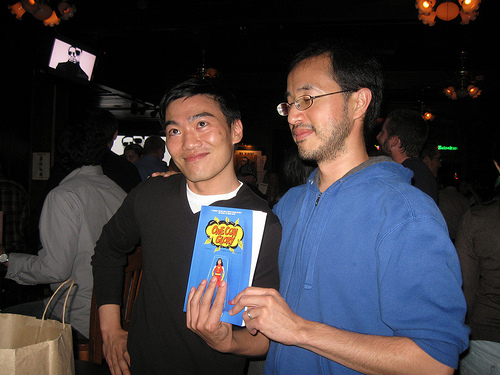
Now that you’ve all read “With Violet Light” (and if you haven’t, all the parts are collected here), I thought it would be fun to interview Tom and get his impressions on how The Tom Character turned out. Warning: there are SPOILERS for the story in the following piece.
Oh, and the pic above is Tom doing his best Julie pose (based on Max Riffner’s illustration) with my husband Jeff. Perhaps someday he will have his own Evan illustration to emulate!
**
Tom: [Affecting high-pitched “girl†voice] “What was it like having a character based on you?†[Affecting smarmy “awards show†voice] “Oh, it was such an honor! I felt really touched that you think of me that way!â€
Sarah: Yeah, everyone will know that’s not what you said. Or at least, everyone who knows you will. Can you tell the nice people reading—because they haven’t had the great privilege of listening to our many conversations—what your initial pitch was for The Tom Character?
Tom: I think basically all of my pitches were just to put me in the story—which means someone super-smart, really good-looking, and irresistible to everybody. Most comic bookish stories don’t have that hot gay guy who’s just gonna go and, like, wow everybody. Which is my basic life experience. But seriously: I was just joking. You didn’t have to include a Tom Character.
Sarah: You say you were just joking, but you seemed to have a lot of rather detailed thoughts about what The Tom Character would be doing in the story.
Tom: Well, it’s just always what I think that type of character should be doing, which is seducing all the hot guys. But I was very surprised when there actually was a Tom Character.
Sarah: You were a beta reader for “With Violet Lightâ€â€”when did you realize you were reading about you?
Tom: As soon as there was an Asian male in the story, I was pretty sure it was based on me. And as I read, I sensed he was based on me. My initial reaction was, “Oh no, she better not.†And then you did.
Sarah: Um, excuse me, but there are other Asian males in my life. Including my husband. Why did you assume it was you?
Tom: Of course it’s gonna be based on me. It wouldn’t be based on [your husband] Jeff, because he wasn’t the romantic interest. And Julie’s based on you.
Sarah: SHE IS NOT.
Tom: Puh-leeze! [Makes patented “Girl, please†face.] My expression needs to make it into your transcript somehow…
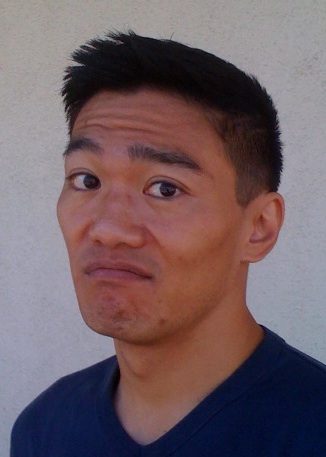
Tom: Anyway, I figured I’d be the next choice, because who else would you want to write about? I know I’m coming off great here. Everyone reading will be like, “Who is this douchebag?!â€
Sarah: You’re just…being you. I thought maybe the “I Hate The Battlestar Galactica Finale†bit is what tipped you off, that being one of your trademark speeches and all.
Tom: That was a complete confirmation that it was supposed to be me. But I had a feeling.
Sarah: Okay, so then you go, “Oh no, she better not.†What was your fear?
Tom: I didn’t want you to attach him to Braidbeard—the really annoying guy! The guy no one likes!
Sarah: But why did you think that was where it was going? Because he’s introduced very innocuously: he’s just the guy who works at the comic book shop.
Tom: Because if the character’s based on me, he’s going to have some sex at some point and there was only one option. And it wasn’t a good option. You’re an efficient writer, which is good—so you wouldn’t just introduce some random character, give this character a name, set up a relationship with your main character if he’s not gonna have a bigger role down the line.
Sarah: Thanks—I’ll take that as a compliment coated in indignation. I just want to say this for the record, though: you were also a beta reader on One Con Glory, and you kept saying, “Braidbeard sounds HOT.â€
Tom: That was before you told me what he was really like. And also, I was just trying to get on your nerves, because you kept saying, “He’s so annoying!†I was like, “Oh, he seems hot.†And then you were like, “NO HE’S NOT HE’S NOT HOT.†So I was like, “Oh, that annoys Sarah. I’m feeling like I want to annoy her.â€
Sarah: Alright, dear friend, setting that aside: now that you know the whole story and The Tom Character’s role in everything, how do you feel?
Tom: Well, I like The Tom Character. I like the name Evan. I like that he’s smart, a little spirited. Obviously adorable. What I don’t like is that his boyfriend’s so annoying. [“Girl, please†face.] I have to say, I wouldn’t put up with that. But then again, he’s not me.
Sarah: In Evan’s defense, I will say that he kind of doesn’t put up with it, and I think that’s why Braidbeard likes him. When Braidbeard is doing his usual annoying thing with Ghost World, Evan’s kind of like, “No, shut up.†And then he schools him, which I think is what you would do.
Tom: I would school him, then I would dump him.
Sarah: Okay, I can see that. I’m sure you’ve had many other characters inspired by you inserted into other works of fiction, but how weird was this particular instance?
Tom: I don’t think it’s weird. I will say this is the first time that I know of someone putting a character based on me in something. But the character’s minor, so you don’t have to go too far into his psyche: it’s not like you’re putting all of me on the page. So it’s not uncomfortable that way. And also, I think the character is pretty much positive all around. I don’t think anyone would dislike this character. It’s one thing if this character were, say, Braidbeard: “Guess what, Braidbeard’s based on you, Tom!†I’d be like, “Do I act like that?!†I would say Evan is a less annoying version of me. He’s not a complete asshole.
Sarah: You’ve talked about why you disapprove of Evan’s storyline here—I think you had an alternative, fanfic-y storyline in mind?
Tom: That’s a jokey alternative storyline. But yeah, I actually think Evan should’ve gotten Jack. For me, that would’ve been the happiest ending, the most suitable, and the most realistic.
Sarah: But that’s kind of unhappy for the protagonist, no?
Tom: I don’t know if it’s unhappy for her! I think she’d be like, “Whatever. I had my time with him, it was sweet.†She’s a realist. No, no, I would never deprive Jules of her true love.
Sarah: That’s very nice of you.
Tom: Also, it’s not Evan’s story. If I were to co-opt your character, I’d write a different story. It wouldn’t have to involve Jack! It would involve a different hot guy.
Sarah: Well, sometimes, supporting characters get their own stories. Would you want Evan to have his own, like, stand-alone spin-off or something?
Tom: I think that would be an interesting character to explore, but honestly, I kind of think Braidbeard would be more fun to write. The Adventures of Gay Braidbeard. I don’t think the premise could be that he and Evan are still dating. It would be that they are no longer dating, but they’re friends and Evan is trying to get him to go out and date.
Sarah: Like his Gay Fairy Godmother?
Tom: Yes!
Sarah: It’s interesting that you once again cast yourself as the supporting character in this story. Is that just because you’re so perfect, you have nothing left to learn?
Tom: Probably. No—Evan is, in a lot of ways, an idealized version of me. I’m kind of an ass. So he’s too grounded and pleasant and those characters are less interesting as the leads. Unless you want to give Evan some flaws, his journey’s not going to be as interesting. Braidbeard’s got a lot of flaws. Braidbeard is basically all flaws.
Sarah: Is there a flaw you’d give Evan, then?
Tom: Maybe an Evan flaw would play off a Braidbeard flaw. Like, Braidbeard’s really jaded: maybe Evan is just too innocent.
Sarah: But he still hates the finale of Battlestar Galactica, right?
Tom: He so does.
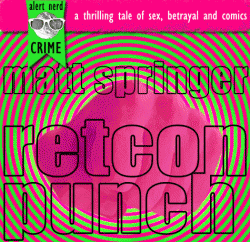
Retcon Punch, Episode 05: Stuff
Nov 03New to Retcon Punch? Start at the beginning.
“Here’s what I was thinking.
“Basically, we’re dealing with a big-ass safe, that’s like decades old, right? So it’s not too big a problem because it’s old. Old means, if you break in, it just sits there broken into. It’s not going to start shouting and inform the authorities.
“So all I really need is A, the proper equipment, which is basically a trip to Home Despotâ€â€”she actually said “Despot instead of “Depotâ€â€”“and then time. A nice, solid, clear chunk of time.
“If, for example, I were to come in tomorrow night while you were in the store anyway, doing whatever the fuck it is you do, then I could torch away in the back room while you do that stuff. A few hours later, we’re open. I grab the comic and it’s bye bye Superb Comics, I’ve become airborne.â€
“Airborne?â€
“Chuck Berry,†she says. “Buy a CD once in a while.â€
“I do.â€
“Okay, what was the last CD you bought?â€
“Um…the soundtrack to The Dark Knight.â€
“You mean, like, the strings and orchestra and shit?â€
“Yes, the strings and orchestra and shit. Hans Zimmer. James Newton Howard. Legendary.â€
“No, Chuck Berry is legendary. Movie music is for…well, people like you.â€
She’s busting my chops, but not in a mean way. More in a slightly flirty way that allows me to believe I have a one-in-a-thousand chance at making time with the abnormally cute girlfriend of my boss, who is a vindictive, petty man-child, and as we’ve already quite clearly established, a huge douchebag.
But first, I’ve just got to put my livelihood on the line to help her steal a very old comic book out of a very old safe.
**
I stumble into my one-bedroom apartment at about 11:30, flip on the TV, collapse into my crummy recliner.
A stranger would not be misguided in assuming my hovel was scheduled for an appearance on one of those cable hoarding shows. The line between kitchen, living room, bedroom and bathroom is blurry when there’s comic books and toys everyplace. Also blurry: The line between garbage and collectible, trash and treasure, worthless curio and precious memory.
For me, it started at a spinner rack when I was thirteen; for you, maybe it was a pack of baseball cards from a pharmacy up the road, or a Star Wars action figure you begged your mom to buy for weeks before she finally gave in. Something small, packed with meaning as your age advances, a reminder of how you imagine things were, even though they weren’t at all that way. Nostalgia. Oh, how the ghost of you clings.
Eventually, if you’re not careful, the act of saving itself becomes a way of fueling a nostalgia machine that constantly demands something new so you can eventually pretend it’s something old. So I collect comic books, even though the issue of Hulk that I pick up at work for $2.39 with my employee discount isn’t worth the energy I spent to carry it from the shop to my car. It gets read, which is fine, and then it gets bagged and boarded—a comic book geek term that conjures images of corpses zipped up tight and shipped carelessly to waiting graves—and it gets saved, filed, catalogued, and forgotten about. That issue of Hulk will exist for years, maybe decades, in a box in my home in my life, not as a single item for which I have any concern whatsoever, but as part of a larger entity for which I have an irrational attachment. They are My Comics.
My Comics, rather than an active thing I enjoy on a regular basis, are more like this huge heavy pulpy albatross hanging constantly around my neck. Every six months or so, I try to corral them into some kind of semblance of order, and it stays sorta-tidy for a week or two before every available surface is once again saturated by ephemerea.
In spite of debt, in spite of loneliness, in spite of becoming bitterly resigned to their awfulness years ago, My Comics continue to grow. They enter my home in stacks fresh from the shop; they slip into my hands at yard sales, thrift stores, and conventions. Friends I’ve had since high school stuff them into envelopes and mail them to me unannounced, with a simple note inside: “Do you have this one?†My great aunt still buys me a subscription to Amazing Spider-Man every year for my birthday.
Comics, and toys and books and DVDs and all the other detritus that attaches itself to the geek lifestyle, like barnacles on a Titanic plummeting endlessly into a bottomless ocean—they follow me around. They’re my past that devours my present. If I’m not careful, they could become my future. You might say they already are.
Peasant Problem, Part 1
Nov 01
The autumn air was crisp and smelled of lake fog and tart apples. In the dawn half-light, the paths that crisscrossed the forests of Camp Lavery were abuzz with bustling silhouettes, all heading toward the Lodge, where the Boy Scouts who used to summer there had their parade grounds. They came in cloaks and mantles, padded leather, denim jackets and wool peacoats, some still wrapped in their sleeping bags, some still wearing prosthetic ears and beaks. Mostly, they dressed to fight off the chill in the air.
Wayne had his hands lashed together behind him. One of the new players, an elf girl whose name he didn’t know, gave him a prod with her staff. The foam tip gave against him, even as he stumbled forward, freshly stoking his indignity. A newbie was his jailor. Wayne had been there for years, since that first silly, fumbling weekend. This was how he was repaid. He squinted against the coming dawn and felt the sting of green makeup in his eyes.
The anonymous elf led Wayne up a rocky incline, past the volleyball courts and delivered him to the parade ground. As he crossed the green rectangle in front of the Lodge, dew kicking up and clinging to his brown wool trousers with each step, Tom Courts approached him. There were five Toms at the LARP, so everybody called Tom Courts by his full name all the time. He didn’t seem to mind. From his fake white beard and off-white robe, Tom Courts was fully in character as Pastor Sukor, leader of the local temple and the most powerful healer in game. Sukor proffered a canteen and Wayne shrugged, trying with limited success to indicate his bound hands. The pastor lifted the canteen to Wayne’s lips and tipped the mouth of the canteen forward, fresh water spilling out. Sukor dismissed the elf girl with a nod, taking Wayne by the shoulder and leading him forward, silently, to stand beneath the bare flagpole amid a line of eleven other green-painted faces. Not twenty-four hours before, Wayne thought, the dozen of them had stood on the volleyball court scheming. In the harsh light of day, they were failures. The whole thing had seemed so perfect. Where, he wondered, was the hole in things?
Wayne was still puzzling it all out when The Count arrived. Instead of a horse or a chariot or a regal palanquin, the ruler of the Battle Country arrived in a puttering golf cart. Wearing a puffy shirt from a Renaissance Faire clearance rack and a cape that epitomized ‘dainty’, Darren unfolded himself out of the cart. He’d always been tall and lanky like that – Wayne remembered sitting in the sixth grade cafeteria, watching Darren fumble across the cafeteria under the weight of kids chanting “Lurch!†and grimaced again reflexively. Wayne had known Darren since before his freakishly tall friend had helped to found the Battle Country LARP, but now The Count stood in judgment against him. It was a betrayal, Wayne was sure.
An orc on Wayne’s left – Fat Chris – yawned, and Wayne was exhausted, too. He had been up all night, part of it in captivity. Tom Courts supplicated his fake pantheon for mercy and kept order over a line waiting to have oatmeal doled out of a giant pot by two sprightly gnome girls. Darren strode through the crowd, stopping to hear the entreaties of the LARP-populace.
Wayne wondered how these assholes could stay in character at this hour. He imagined asking Tom Courts this question and saw Courts in his mind’s eye, asking Wayne how he could not.
Darren reached the center of the parade grounds. With a flourish, he spoke.
“CITIZENS OF THE BATTLE COUNTRY! We arise this morning to find our lands shaken by tragedy. I have summoned those accused to stand here before you in judgment, and I assure you, citizens that justice. Will. Be. Served.â€
Give it to Darren, Wayne thought, the man can act. For someone so unassuming in real life, so uncomfortable in his gangly body, The Count really came out of his shell when he was role-playing. Wayne considered that this was probably because he was pretending to be someone else, and wasn’t sure whether or not the thought made him sad.
“Those of you in The Vale last night have told me what occurred,†Darren continued, Count voice booming across the camp, “but the Battle Country is governed by laws and a spirit of fairness. There will be punishment for the guilty.â€
Several of the orcs were blubbering, inchoate whimpers in their throats. Just to the left, Fat Chris had tears rolling down his face, streaking his shoddy makeup. Wayne had been stoic until now – had to be stoic, but now a worm of a thought crept into his mind. I’m doomed, it said. I’m doomed, I’m doomed, I’m doomed I’mdoomedI’mdoomedI’mdoomed.
“But,†The Count intoned, “we believe in equal time, and the perpetrators that stand accused will have a chance to speak. That is why I am convening my Privy Council to hear testimony from Grimgnash Hordecaller, chieftain of the Seven Skulls orcs.â€
It took Wayne several moments to realize that he was Grimgnash Hordecaller.
Some Time Ago
“And then, just after midnight, during the bonfire, we were attacked by a hippogriff stampede!â€
It was tenth grade and they were huddled around a round lunch table on Rib-B-Q day. Darren’s cousin Ralph had taken him live-action role-playing over the weekend, to a game in Delaware. It was called Ioun, which Wayne knew had to be a rip-off of the Ioun Stones from Dungeons and Dragons.
“Right,†Wayne countered through a mouth half-full of Rib-B-Q, “but guys in hippogriff costumes. How do you even take that seriously?â€
“It’s suspicion of disbelief, Wayne. When I’m in cos-â€
“Suspension, Darren. Suspension of disbelief.â€
Darren fired back immediately: “Your face suspends disbelief.†Across the table, Jimmy Yeung slow-clapped while a few other sophomores groaned. “Really, though,†Darren went on, “when you’re out there and you’re dressed up, it’s easy to ignore the fake masks and the fact that an elf has a Slayer t-shirt on under his armor. It’s like…it’s like doing improv. Like you’re playing D&D and acting at the same time.â€
Darren’s face was all twisted up from the effort of trying to articulate something that he didn’t have the vocabulary to communicate. “Look,†he said, with a bit of a stammer, “there’s another event next month. You guys should come with me.â€
Wayne broke the silence first. “You really want us to drive two hours to play Hobbits in the woods all weekend? We could stay home, order some pizzas, and roll some dice.â€
Darren gave a snort. “Well yeah, except that there are a lot more girls there.â€
A month later, most of the table went down to Delaware for the weekend. Most of them told their parents that they were just camping. Jimmy Yeung had mononucleosis, so he had to stay home.
Now.
The Lodge only got used a few times a year, and now it was covered in dust. The waxing light filtering in through the shaded windows made the air look grainy like old film, enhancing Wayne’s ever-growing sense of dread. He stood in front of a long mess table as Tom Courts stood behind him, untying his hands. His wrists were raw where they’d been tied by a pair of overeager fourteen year olds. Mike J. and Mike R. he remembered, who were inseparable and dressed in all black; they used asinine swords, designed to look like giant keys. Anita the blacksmith had told Wayne that the swords were from a videogame. With Disney characters. No wonder, Wayne resolved, that those kids were terrors.
One of the Mikes had knelt on Wayne’s back, holding his hands steady, while the other Mike tied the knots – good, Boy Scout knots. Wayne could still taste the peat in his mouth from where the Mikes had tackled and held him. They had come at him from behind.
The Mikes were going to get hailed as heroes. They’d get titled, at least, for taking down the orc chieftain. Which was preposterous to Wayne. Wayne had been here for four seasons and still had no title. Because he was Darren’s friend. Because the staff wanted to avoid the perception of bias. Darren had told him as much when he’d pressed the issue. That talk was just one thing piled onto the list of problems with the game that led to what Wayne was already thinking of as the Volleyball Court Coup.
Darren sat at the center of the table, surrounded by his staff – Anita, Tom Courts, Sendhil the king of the dwarves with his atrocious Scottish accent, all the rest of Darren’s staff of cronies. Their stares bored into Wayne, and he felt himself starting to sweat.
The Count slouched in his folding chair, the facade dropping; he was just Darren again. His head sunk for a moment, and when it came up again he asked, simply, “What the hell, Wayne?â€
It was a question that Wayne hadn’t really considered. He was angry. He felt slighted and betrayed. But not just on a personal level. He thought about the Mikes again, how he couldn’t understand why someone would want to play somebody else’s concept instead of making something on their own and there, maybe, Wayne found clarity.
“Count,†he said, launching into the gruff Tom-Waits-as-a-Caveman voice that he used in-game, “I don’t think we should proceed without the Orc councilor present.â€
The council expected contrition. It hadn’t come. They were taken aback.
After a beat, Tom Courts looked at Wayne. “There is no orcish councilor. As chieftain, you know this.â€
Anticipating where Wayne was going, Anita added, “The dark elves don’t have a seat on the council, either.â€Â She was trying to be conciliatory. She probably should have known she was making things worse. Some of the elves and gargoyles at the table realized this, as did the swarthy, beardless dwarf: Sendhil buried his face in his palm.
“They’re evil races,†one of the other voices at the table blurted out. Again, Wayne thought, not helping.
Grimgnash’s eyes lit up. “Then you admit this body has no authority over me,†Wayne improvised. “You openly admit your prejudice against the Seven Skulls orcs and expect me to submit to your rule? Laughable.â€
Through his cleric’s beard, Tom Courts spat, “There are rules, Wayne. Procedures. You can’t just tinker with the plot.†Of course he’d say that; Tom Courts was head of Plot on staff.
Dropping character for a second, Wayne fired back. “Tom, there hasn’t been any decent orc plot for over two seasons. No orcs have title. Orcs can’t sit on the council. We’re ignored, we’re ostracized from the rest of the player community, though they’re content to accept our aid when there’s a mod that they can’t defeat on their own.†He paced in front of the table, stopping in front of Anita, the treasurer. “We pay to come out here each month and be ill-used. I refuse to accept that the only way out of that is to quit and go elsewhere and I refuse to play a game in which I have no agency.â€
Wayne and Darren locked eyes. “You’ve had ample time to fix this imbalance. You haven’t. My people no longer recognize your authority to adjudicate us as a result of that. And you bring me in to punish me for playing the game the way I wish to play it. Weak.
“Let me tell you what’s going to happen. I am going to walk out of here, take the other orc players with me and return to our campsite. From there, the ball is in your court; send an emissary with a truce flag to us by sundown, or we are at war. And this time, it won’t just be the orcs. It will be the dark elves with us. It will be the other disenfranchised races. The guilds without influence. They will rally around the orcs, my friends, and we will come for you. We are relentless; we are orcs.â€
With a deep bow, Grimgnash Hordecaller, chieftain of the Seven Skulls orcs, stormed out of the Lodge. Wayne was certain that he’d just done something awful and irreparable, but he knew that he’d take none of it back. As he walked across the parade grounds, the other orc players fell into line behind him, a bit hesitant at first, not knowing what just happened. Along with them came a handful of dark elves and some other stragglers of various races. The Country Guard brandished their weapons and created a human barricade, but the orcs kept walking. They knew that, stripped of their weapons, they couldn’t fight back in-game. They were willing to be martyred. At least, Wayne hoped they were.
The guard captain, a particularly hawkish teen who Wayne never liked, was about to call the order to attack, when the voice of the Count broke out from the doorway to the Lodge. “Guards, let them pass!â€
The players all looked bemused. They were all anticipating the fight. Wayne smiled at the hawk, knowing his cockiness would result in bruises later. He no longer cared.
The Hawk looked back at Darren for instructions. Once more, the Count’s voice boomed, “Escort the townsfolk back to their camps and then we will meet to discuss our defenses. Let all the Country know we are at war with the orcs!â€
Just like that, Wayne knew the end had begun.